other

Blogs

  • Complete Feed Production Equipment: Core Machinery for Livestock Farming & Feed Industry
    Complete Feed Production Equipment: Core Machinery for Livestock Farming & Feed Industry
    Aug, 17 2026
    Feed production equipment serves as the core machinery for livestock breeding and the feed industry. Integrating raw material handling, grinding, batching, mixing, pelleting, extrusion, cooling, screening and packaging, these systems enable automatic and standardized production from raw grains to finished feed. Modern complete production lines feature high efficiency, energy conservation, environmental protection and precise formula proportioning, and are widely applicable to processing feed for poultry, livestock, aquaculture, ruminants and other varieties. 1. Raw Material Receiving & Cleaning Equipment Raw material receiving is the first procedure of the whole production line. Key equipment includes raw material silos, bucket elevators, screw conveyors and scraper conveyors, which undertake transportation and temporary storage of corn, soybean meal, wheat bran, premixes and other raw materials. Cleaning equipment mainly consists of primary cleaning sifters, magnetic separators and dust removal systems. These devices remove impurities such as stones, metal scraps and rope residues to protect downstream equipment and improve the purity of finished feed. 2. Grinding System Grinding determines feed fineness and animal digestion efficiency, and accounts for the largest proportion of energy consumption in the whole workshop. Hammer Mill: Highly versatile, suitable for conventional raw materials like corn and grains, featuring high grinding efficiency and easy maintenance. Roller Mill: Ideal for fine grinding with low breakage rate, mostly adopted for high-grade poultry feed and aquafeed. Water Drop Mill: Adopts optimized grinding chamber structure to cut energy consumption and achieve more uniform particle fineness. 3. Precision Batching & Mixing System Batching System: Equipped with electronic batching scales, automatic batching silos and PLC intelligent control system. It accurately measures major raw materials and additives according to feed formulas with controllable weighing errors. Mixing Equipment: Mainly twin-shaft paddle mixers and single-shaft ribbon mixers. They deliver superior mixing uniformity, evenly blend micro-additives rapidly and avoid material separation, ensuring consistent nutritional levels of feed. 4. Pelleting & Forming Equipment Pelleting is the core process of pellet feed manufacturing. It improves feed palatability, reduces feed waste and facilitates storage and transportation. Ring Die Pellet Mill: Large production capacity and compact pellets, perfect for large and medium-scale feed mills for mass production. Flat Die Pellet Mill: Simple structure and easy operation, widely used in small and medium farms and straw feed processing. Conditioner: Supports steam conditioning to soften materials, realize sterilization and gelatinization, and enhance pellet hardness and water resistance. 5. Extrusion & Special Forming Equipment Wet and dry extruders are specially designed for aquafeed, pet food and high-grade creep feed for piglets. Under high temperature and high pressure extrusion, feed achieves high gelatinization degree, excellent floating property and higher digestibility, while anti-nutritional factors can be eliminated effectively. 6. Post-processing Equipment Counter-flow Cooler: Rapidly lowers temperature and removes moisture to prevent pellet caking and mildew. Classifying Sieve: Removes unqualified broken particles and powder to guarantee uniform pellet size. Crusher: Breaks large pellets into crumbles for young poultry and young livestock. 7. Finished Product Packaging & Intelligent Control System Automatic packaging scales, bag sewing machines and palletizers realize automatic quantitative filling, sealing and stacking. Central control system monitors production output, temperature, moisture, formula ratio and other parameters throughout the whole process. It supports data traceability and fault alarm to realize intelligent manufacturing. 8. Equipment Advantages & Application Value High Efficiency & Energy Saving: Optimized mechanical structure and variable frequency control reduce power consumption and dust pollution. Stable Product Quality: Precise proportioning and uniform pellets guarantee consistent nutrition performance. Wide Compatibility: Capable of producing powder feed, pellet feed, extruded feed, crumbles and other multiple feed types. Intelligent & Labor-saving: High automation level cuts labor costs and improves production safety. Modern feed production machinery has evolved from standalone machines to integrated full-process solutions. Balancing production capacity, product quality and environmental compliance, it acts as vital support for modern breeding industries to lower production costs, boost profits and ensure feed safety.
  • 20–50kg Fully Automatic Granular Packaging System for Grain, Feed and Seeds
    20–50kg Fully Automatic Granular Packaging System for Grain, Feed and Seeds
    Aug, 11 2026
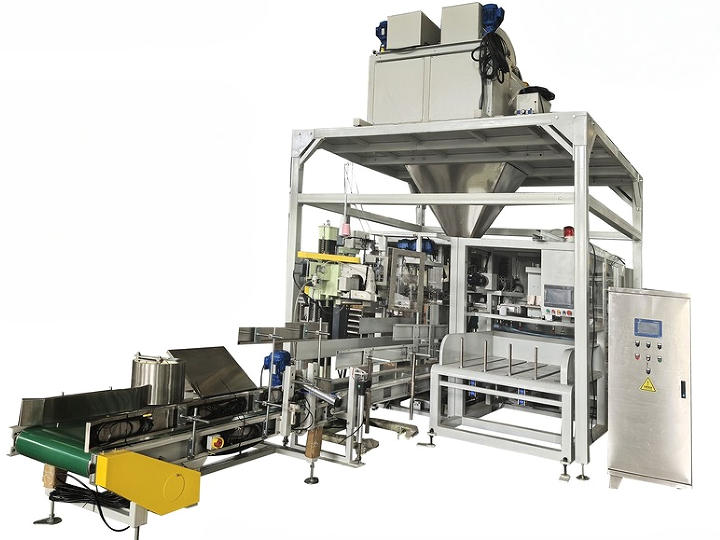
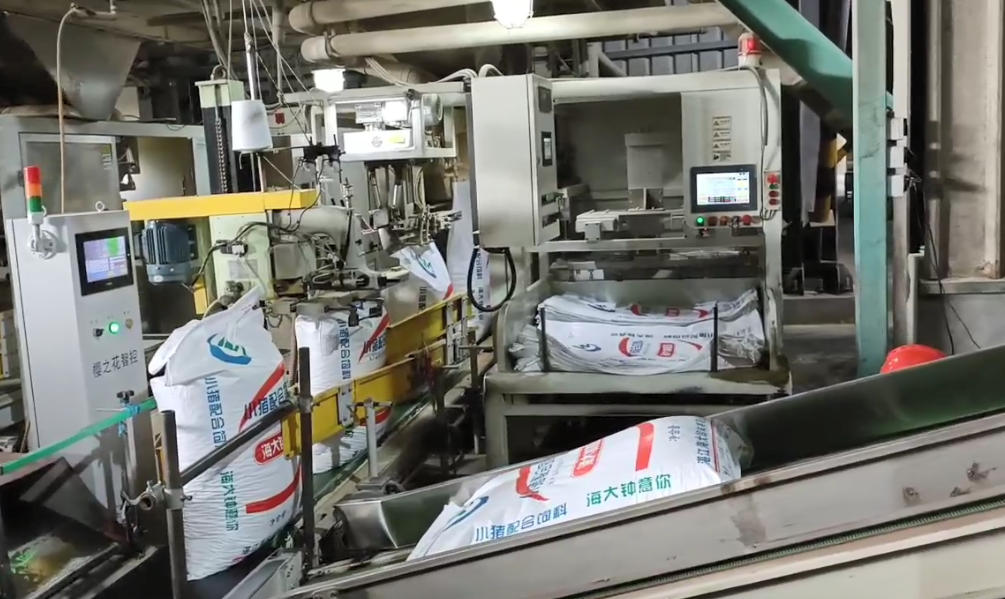
      In large-scale agricultural and feed manufacturing production, packaging bulk granular materials ranging from 20kg to 50kg has long been a labor-intensive and inefficient process. Traditional manual bagging relies heavily on workers for material feeding, weighing, filling, and bag sealing, which inevitably causes unstable weighing accuracy, low production efficiency, high labor costs, and messy packaging standards. For grain processors, feed factories, and seed planting enterprises with mass production demands, upgrading to professional large-bag automatic packaging equipment has become the key to improving overall production competitiveness. Fully automatic granular packaging systems integrate feeding, precision weighing, filling, sealing, coding and conveying into one continuous workflow. These machines are purpose-built for bulk granular materials including rice, wheat, corn, beans, animal feed pellets, grass seeds, vegetable seeds and flower seeds, specially optimized for standard 20kg, 25kg, 40kg and 50kg large-specification packaging scenarios. Core Working Principle of 20–50kg Automatic Granular Packaging Line Different from small and medium-sized packaging equipment, the 20–50kg granular packaging system is professionally designed for heavy-duty bulk packaging. The entire production process is fully automated and unmanned, effectively solving the pain points of heavy manual labor in large-bag packaging. The equipment adopts a high-precision quantitative weighing module, which realizes automatic quantitative feeding through dual-stage fast and slow feeding control. After the material reaches the set weight, the system automatically stops feeding, completes accurate filling, and cooperates with automatic bag clamping, bag releasing, sewing or heat sealing, date coding, and finished product conveying. The whole process runs continuously and cyclically, with no need for manual intervention in the middle link, greatly simplifying the large-bag packaging process of granular materials. Applicable Materials & Packaging Specifications This fully automatic packaging system is highly adaptable and covers almost all common bulk granular agricultural and feed materials, with fixed and mature support for 20–50kg mainstream packaging specifications: Grain materials: Rice, wheat, corn, soybeans, mung beans, millet and other food grains, suitable for 25kg, 40kg, 50kg bulk wholesale packaging Feed materials: Animal feed pellets, poultry feed, aquatic feed, livestock compound feed, meeting the large-bag packaging needs of feed factory bulk delivery Seed materials: Grass seeds, vegetable seeds, flower seeds and various crop seeds, realizing standardized large-bag quantitative packaging for seed batch sales and storage It supports multiple common large-bag types on the market, including woven bags, PE composite bags, and plastic bulk sacks, with strong compatibility and no need to replace equipment for different bag types of the same specification.

  • What Is an Auto Bag Feeding Bagging Machine for 20–50kg Bulk Materials?
    What Is an Auto Bag Feeding Bagging Machine for 20–50kg Bulk Materials?
    Jan, 19 2026
      Most ordinary bagging machines on the market only support automatic weighing and filling, still requiring manual bag placement. Our fully automatic 20-50kg grain feed bagging machine with auto bag feeding system integrates the core auto bag feeding technology, realizing real unmanned packaging. It helps enterprises cut labor costs by over 60%, improve production efficiency by 2–3 times, and achieve standardized and intelligent workshop management. We support non-standard customization according to customer site conditions, material characteristics and output requirements. Complete after-sales service including installation guidance, technical training and long-term maintenance ensures stable operation of your production line.   This industrial-grade bagging machine is a dedicated open-mouth bag packaging solution for 20kg to 50kg granular materials, including rice, wheat, corn, mixed grains, and all kinds of pellet animal feed. Different from ordinary automatic weighing filling machines, it is equipped with an independent auto bag feeding system, covering automatic bag storage, bag picking, bag opening, bag positioning, and bag clamping. Cooperated with high-precision gravimetric weighing unit, PLC intelligent control module, automatic filling, sewing and conveying device, the whole line achieves one-stop automatic operation. Workers only need to replenish empty bags and collect finished products, which greatly simplifies the packaging workflow and improves factory automation level.
  • Key Factors to Choose Automatic Packaging Machine
    Key Factors to Choose Automatic Packaging Machine
    Jan, 19 2026
    1. Confirm Your Material Type and Packing Weight Range   Before selecting any automatic packaging machine, you must first clarify your actual packaging materials and target weight range. Different materials such as fine powder, granular and mixed materials require different feeding systems and weighing structures.   To avoid equipment mismatch, you need to confirm: whether your material is powder or granular, your bag type, and your standard packing weight. It is always recommended to share real material photos or factory packaging samples with suppliers for accurate machine configuration confirmation.   2. Match Machine Capacity with Your Daily Production Output   Production capacity is one of the most critical selection standards. Many buyers purchase machines that cannot keep up with their factory output, resulting in production bottlenecks.   You need to confirm your target packaging speed:how many bags per hour you want to achieve. Small-scale production fits semi-automatic machines, while high-output factories need fully automatic packaging lines to support continuous, stable mass production.   3. Confirm Bag Type and Exact Bag Size Requirements   Packaging machines are highly dependent on bag specifications. Different bag types require different clamping, opening, and sealing mechanisms.   Make sure to confirm your bag type (woven bag, plastic bag, open bag) and exact bag length and width. Custom bag sizes need pre-adjustment on machine parameters to avoid unsuccessful bagging, unstable sealing, or low packaging efficiency after installation.   4. Consider Your Workshop Space and On-site Conditions   A full automatic packaging line includes a main packing machine, hopper, conveyor system, and electric control cabinet, which requires a certain workshop area.   You need to evaluate your factory space limitations, workshop layout, ground flatness, and local voltage conditions. If your workshop is limited in size, we can provide compact customized layout solutions to fit your factory perfectly.   5. Check Overseas Installation and After-sales Support   Industrial packaging equipment is long-term production machinery, so reliable after-sales service is essential for stable operation.   When choosing a supplier, confirm whether they provide overseas on-site installation, worker operation training, remote technical support, and long-term spare parts supply. Complete after-sales support helps you avoid production shutdown risks and extend machine service life.   Every factory has different materials, output demands, workshop conditions and budget plans. A suitable packaging line can greatly improve your production efficiency and reduce labor costs.   Send us your material photos, bag type, target bags per hour, workshop size and required packing weight. Our professional engineer team will customize the most suitable automatic packaging solution and provide you with an accurate quotation for free.
  • Fully Automatic vs Semi-Automatic Bagging Machine: Key Differences for Your Business
    Fully Automatic vs Semi-Automatic Bagging Machine: Key Differences for Your Business
    Jul, 29 2026
      When purchasing packaging equipment, many manufacturers struggle to choose between a fully automatic bagging machine and a semi-automatic manual bag-feeding machine. The core differences lie in automation level and overall production benefits, which directly affect your labor cost, output efficiency and production scalability. The fully automatic model realizes full-process automated operation, including automatic bag picking, bag feeding, filling and sealing. No manual intervention is required during normal operation. This type of packaging line can save 3 to 4 workers for your factory. Featuring high working efficiency, stable packaging precision and low error rates, it is perfectly designed for large-scale, standardized mass production.   The semi-automatic version relies on manual operation for core bagging work. Workers need to manually sleeve bags on the machine before it finishes filling and sealing automatically. Due to manual participation, its production efficiency is relatively low, and it requires more on-site operators. It is most suitable for small-scale production and multi-specification flexible orders with frequent product changes.   Choose a fully automatic bagging machine if you pursue long-term high output, lower labor costs and stable product quality. Pick a semi-automatic bagging machine if you run small-batch, multi-specification production with flexible processing needs.
  • Multi-function VFFS Packing Machine: All-Round Vertical Packaging Solution for Powder & Granule Products
    Multi-function VFFS Packing Machine: All-Round Vertical Packaging Solution for Powder & Granule Products
    Jan, 19 2026
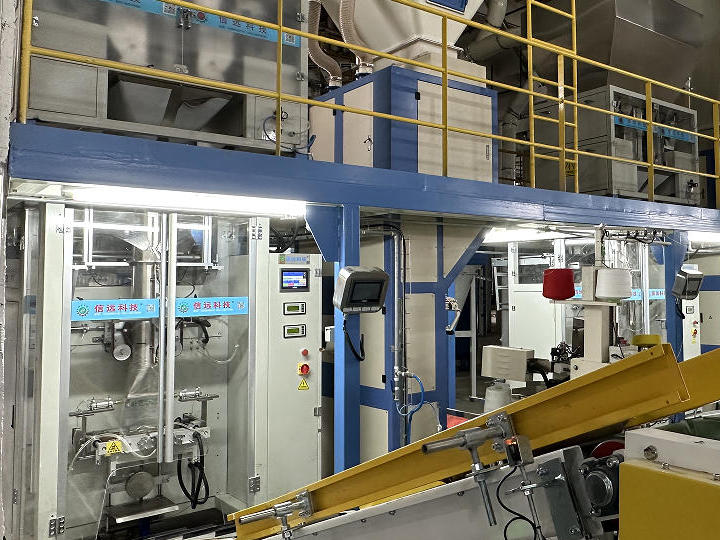
      VFFS Vertical Form Fill Seal machines integrate bag forming, filling, sealing, cutting, and coding in one single unit. Unlike traditional single-purpose vertical packers that only support fixed materials or fixed bag sizes, the multi-function VFFS packing machine adopts a modular and interchangeable structure, allowing manufacturers to switch between different packaging tasks quickly. This multi-functional design enables one machine to handle various materials including wheat flour, starch, spices, rice, grains, and small granular products. It supports multiple bag types such as pillow bags, gusset bags, and laminated film bags, fully meeting diverse retail and wholesale packaging standards. Equipped with intelligent PLC control, automatic weight calibration, and dust-proof sealing design, the multi-function VFFS packing machine ensures stable packaging accuracy, clean production environment, and consistent finished bag appearance. Factories can effectively reduce manual operation, lower production costs, and improve overall packaging efficiency. Ideal for flour mills, food processing plants, grain factories, and food export enterprises, the multi-function VFFS packing machine offers reliable automated packaging solutions for global market demands.   The multi-function VFFS packing machine is a premium vertical packaging solution tailored for global food export enterprises. It combines multi-scene production capacity, high-precision weighing performance, and international food safety standards, helping manufacturers unify product packaging quality and improve market competitiveness. Different from ordinary single-function vertical packing machines, this multi-functional VFFS system supports flexible production of diversified product lines. It can process wheat flour, cereal grains, and various food powders, delivering consistent, neat, and export-standard packaging results for cross-border shipments. With high-precision weighing control, stable heat sealing performance, and dust-free closed filling design, the machine effectively reduces product loss, avoids packaging defects, and meets the strict quality inspection requirements of international food procurement projects.    
  • High-Demand Application Scenarios For Small Rotary Premade Bag Packing Machine
    High-Demand Application Scenarios For Small Rotary Premade Bag Packing Machine
    Aug, 04 2026
      Labor shortages, rising labor costs and multi-SKU flexible production demands are reshaping the packaging machinery industry worldwide. Among all premade bag packaging solutions, small rotary premade bag packing machines (6-station & 8-station compact rotary models) have become the fastest-growing segment from 2025 to 2026, capturing 41% market share of all premade bag packaging equipment globally, according to packaging machinery industry statistics. Different from large industrial rotary packaging lines used by giant food factories, compact rotary given bag packaging units feature small floor space, flexible specification switching and affordable investment costs, perfectly matching the automation upgrading demands of medium & small feed mills, grain processing plants, snack factories and pet food workshops. This article analyzes the latest market data, technological iterations, real industrial application cases, downstream demand changes and overseas export trends for small rotary premade bag machines in 2026.    Downstream Industry Demand Distribution: 4 High-Demand Application Scenarios 1. Feed & Grain Industry (Largest Application Market, 42% Market Share) Medium and small livestock farms, grain processing factories in Russia, Kazakhstan and Eastern Europe are phasing out manual bagging operations in batches. They prefer compact rotary premade bag machines to match local mainstream packaging specifications. Compared with fully automatic large bagging machines, small rotary devices have lower investment thresholds and can meet the production capacity demand for regional feed factories. 2. Pet Food & Snack Nut Industry The rapid expansion of small-package pet snacks, nuts and oatmeal drives the sales growth of 8-station small rotary pouch machines. These devices support zipper stand-up pouch packaging of 500g–5kg, suitable for small-batch customized production of snack brands. 3. Agricultural Seed & Fertilizer Granule Packaging Seed companies and small fertilizer factories in Latin America adopt small rotary premade bag packaging lines to package granular fertilizers, crop seeds, realizing flexible packaging of different weight specifications. 4. Ready-to-Cook Food Industry With the development of the prefabricated food industry, small rotary premade bag machines equipped with vacuum deaeration functions have grown rapidly, used for vacuum packaging of cooked food and marinated products.
  • Fully Automatic Packing Solution for 25kg/50kg Bag Packaging
    Fully Automatic Packing Solution for 25kg/50kg Bag Packaging
    Aug, 01 2026
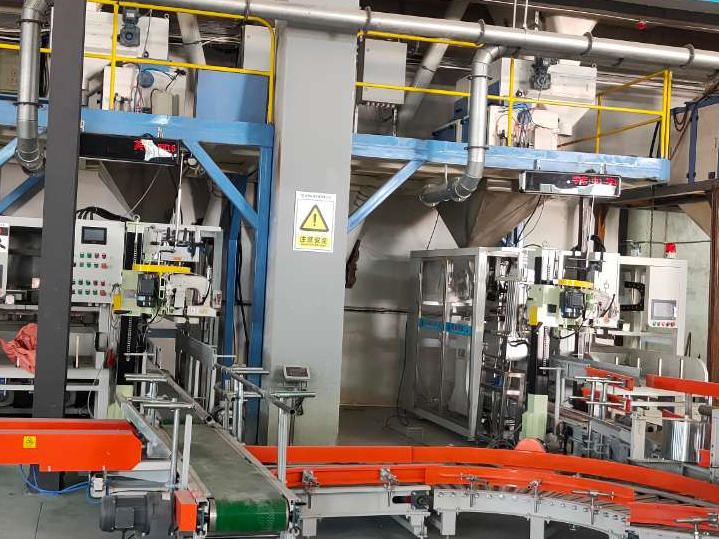
      For factories handling bulk powder and granular materials such as feed, grain, fertilizer, and industrial chemicals, 25kg and 50kg bag packaging remains the most mainstream packaging specification. Traditional manual packaging faces prominent pain points including high labor costs, unstable weighing accuracy, low output efficiency, and severe workshop dust pollution. To solve these industry bottlenecks, our 25kg/50kg full-automatic bag packaging line provides a one-stop intelligent packaging solution for heavy-duty bagging scenarios. This integrated packaging line adopts industrial PLC intelligent control, realizing full automatic operations covering automatic bag picking, bag opening, sleeving, precise weighing, quantitative filling, bag shaping, sealing or sewing, and finished bag conveying. It supports flexible switching between 25kg and 50kg packaging specifications and fits multiple bag types such as woven bags, paper-plastic composite bags and open-mouth bags, adapting to diverse production demands of bulk materials. Equipped with high-precision weighing sensors and fast-slow feeding compensation technology, the machine maintains a stable weighing accuracy, effectively avoiding material loss and unqualified packaging. The built-in dust removal system achieves closed filling, eliminating dust overflow and meeting modern environmental protection production standards. With a durable stainless steel material contact structure and fault self-diagnosis alarm function, it supports 24-hour continuous stable operation with low failure rate and easy daily maintenance. What makes this packaging line stand out is its excellent expandability. It can be seamlessly connected with coding machines, checkweighers, robotic palletizing systems and conveying lines to form a fully unmanned automated packaging workshop. Dramatically reducing manual intervention, it cuts labor costs by over 60% while greatly improving packaging speed and consistency. Widely applicable to feed, grain, fertilizer, chemical, food raw material and building material industries, our 25kg/50kg automatic packaging line is a cost-effective and reliable upgrade solution for medium and large bulk production enterprises, helping clients achieve standardized, efficient and intelligent packaging production.
  • VFFS Machine: Ultimate Vertical Form Fill Seal Packaging Solution
    VFFS Machine: Ultimate Vertical Form Fill Seal Packaging Solution
    Jul, 31 2026
      The VFFS (Vertical Form Fill Seal) machine is a high-efficiency automatic packaging solution for powder, granule and flake products. Widely adopted in food, daily chemical, agricultural and industrial sectors, it replaces inefficient manual packaging and high-cost pre-made pouch packaging, helping manufacturers boost output, standardize packaging quality and cut long-term operational costs.   Different from pre-made pouch machines that use finished bags, the VFFS machine adopts roll film packaging. It completes the full packaging cycle automatically in one continuous process: film unwinding, bag forming, precise filling, heat sealing, date coding, air exhausting and cutting.   Versatile in bag making, the VFFS machine supports three mainstream pouch types to fit diverse sales and packaging needs:   Pillow Bags: Cost-effective and tightly sealed, ideal for mass packaging of snacks, grains and seasonings. Stand-up Bags: 3D stereoscopic design for stable shelf display, perfect for mid-to-high-end products. Gusset Bags: Expanded capacity for large-volume packaging of nuts, feed and bulk granules.   For factories pursuing mass production, stable quality and lower packaging costs, the VFFS vertical form fill seal machine is a high-return investment. Featuring high automation, versatile compatibility and industrial hygienic design, it remains the most reliable flexible packaging solution for global manufacturers.  
Anhui Xinyuan Packing Technology Co.,Ltd

Anhui Xinyuan Packing Technology Co.,Ltd

Get a Free Quote

leave a message

leave a message
If you are interested in our products and want to know more details,please leave a message here,we will reply you as soon as we can.
submit

Home

Products

WhatsApp

contact

Enter product details (such as color, size, materials etc.) and other specific requirements to receive an accurate quote.
leave a message
If you are interested in our products and want to know more details,please leave a message here,we will reply you as soon as we can.
Submit